Buyer guide
Buying Property In Cyprus
Buying property in Cyprus works best when the search starts with fit, questions and independent checks, not only with saved listings. Costa Villa helps buyers compare area fit, property type, budget questions, viewing priorities and the details to raise before asking for a private shortlist.
Summary
A Calmer Way To Compare
Buying property in Cyprus is easier to judge when you separate the decision into five parts: where the property sits, how the home will be used, which property type fits that use, what costs need to be checked, and which questions need independent review.
Start with a short written brief. Include your preferred areas, budget range, buying timing, likely use, property type, travel pattern, maintenance tolerance and the questions that would make you pause.
Use official sources for official steps. The Cyprus government explains that foreign nationals from non-EU member states who wish to acquire immovable property must obtain permission from the local District Administration. The government also provides a transfer fee calculation service, and the Department of Lands and Surveys provides property tools that can help buyers check public calculations before speaking with an adviser.
Start With How The Property Will Be Used
A Cyprus property search can look simple from the outside. A buyer sees a sea view, a pool, a bright kitchen or a familiar resort name, then saves the listing. The harder work starts when the property has to fit a real life pattern.
Before you compare listings, write down how the property will be used. A home for long stays needs different checks from a holiday base. A family move needs different questions from occasional use. A retirement plan may depend on medical access, year-round services and daily convenience. A rental-led idea needs separate cost, management and rules questions before numbers become persuasive.
The first useful decision is not always the exact location. It is the use case. Ask whether the property needs to be easy from the airport, calm in winter, close to restaurants, suitable for remote work, simple to maintain from abroad, or flexible for guests. These details change the areas that make sense and the property types worth comparing.
Costa Villa keeps this first step practical. A stronger inquiry usually says something like: “We are comparing two coastal areas, want a low-maintenance two or three bedroom home, expect several stays each year, need clear running-cost questions, and want to understand what to ask before a viewing trip.” That is easier to work with than a broad request for nice property near the sea.
Compare Area Fit Before Saving Too Many Listings
Cyprus areas can feel close on a map and very different in daily use. A thirty-minute drive may be acceptable for occasional holidays and annoying for regular errands. A beach area may be lively in summer and quiet in winter. A city-edge home may offer stronger year-round services but less resort atmosphere.
Area fit should include more than the nearest beach. Check airport access, medical access, shops, restaurants, schools if relevant, winter rhythm, summer traffic, road comfort, noise, slope, shade, parking and the kind of neighbours or visitors the area attracts.
Paphos often appeals to buyers who want coastal living, airport access and an established international buyer base. Limassol can suit buyers who want a more urban rhythm, business access and a wider year-round services base. Larnaca can suit buyers who want airport access and a calmer coastal starting point. Protaras and nearby east-coast areas can suit beach-led use, but the seasonal rhythm should be checked carefully before a buyer assumes year-round fit.
The purpose of area comparison is not to crown one best area. It is to make the tradeoffs visible. A buyer who understands those tradeoffs can ask for a tighter shortlist and waste less time on attractive properties that do not fit the real brief.
Choose The Property Type Carefully
Property type affects what needs to be checked. A resale apartment, a completed villa, a new build and an off-plan home do not raise the same questions.
A resale home lets buyers see the finished property and the surrounding area. The tradeoff is that condition, title, renovation history, running costs and included items need close attention. A buyer should ask what is known, what can be documented and what needs independent review.
A new build can offer modern layouts, energy performance and lower immediate maintenance. The questions move toward specification, completion timing, snagging, warranties, communal arrangements, developer record, payment stages and what is actually included in the sale.
An off-plan purchase can look attractive because the buyer sees a polished future version of the home. The buyer still needs grounded questions. Ask what has been built, what approvals and documents can be reviewed, what the timeline depends on, what happens if timing changes, which specifications are fixed and which items are optional.
Land needs a different kind of discipline. Location photos can make land feel simple, but road access, planning, services, slope, boundaries, buildability, nearby development, taxes and professional checks matter before a buyer treats it as a future home.
The safest habit is to compare property type before price enthusiasm takes over. A lower price can be less useful if the type creates extra uncertainty, cost or delay that does not fit the buyer.
Build A Realistic Cost View
The buying price is only one part of the decision. Buyers should also prepare questions around taxes, transfer fees, professional fees, survey or inspection needs, mortgage costs if relevant, insurance, communal fees, utility setup, furniture, repairs, pool care, garden care, cooling, heating, management and travel.
The Cyprus government provides an official calculation service for real estate transfer fees. The Department of Lands and Surveys also provides tools for property-related calculations. These sources are useful starting points, but buyers should still ask a qualified professional to explain how the rules apply to their situation.
When buyers compare properties, it helps to use the same cost headings every time. Put the purchase price at the top, then add known purchase costs, ongoing costs, likely first-year setup costs and unknown questions. The unknown column matters because it shows where the buyer is relying on assumptions.
For villas, the ongoing cost view should include pool maintenance, garden care, security, insurance, utilities, air conditioning, heating, repairs, management during absence and any shared or estate charges. For apartments, the running-cost view should include communal fees, lift or shared-area upkeep, reserve funds, parking, storage, building condition and rules that affect use.
Cost questions are not only about affordability. They also reveal whether the property matches the buyer’s tolerance for upkeep. A large villa may be right for one buyer and too demanding for another, even if both can afford the purchase price.
Check Documents Before A Viewing Trip Becomes Emotional
Property viewings can make buyers move too quickly. A buyer who has flown in for a few days may feel pressure to choose from what is available, especially when the view is strong and time is short.
Before a viewing trip, ask which documents or facts can be reviewed by an independent adviser. The exact list depends on the property, but useful questions include title evidence, sale contract timing, planning or building information, communal arrangements, taxes and charges, included items, known defects, rental or use rules and whether anything important is still pending.
The Department of Lands and Surveys notes that declared sale price can be reviewed for fee purposes when it does not represent market value. That is one reason buyers should avoid building their cost expectations only from listing text or verbal claims.
Costa Villa does not replace the buyer’s adviser. The goal is to help buyers ask sharper questions before they commit energy, travel time or negotiation attention.
Plan Viewing Trips Around Comparison, Not Excitement
A useful viewing trip has a structure. It should compare the same questions across every serious property.
Before the trip, write down the reason each property is included. For each one, add the question that could remove it from the list. That question may be about area, condition, cost, access, title, timing, noise, maintenance, rental rules or daily convenience.
During the viewing, take notes in the same order each time. Start with arrival and access. Then check light, sound, privacy, shade, storage, outdoor space, parking, stairs, heat exposure, cooling, water pressure, signs of wear, appliance condition, shared areas and the surrounding streets.
After the viewing, do not rank properties only by emotion. Compare how each home performed against the brief. The best property is not always the most dramatic one. It is the one that still makes sense after the questions are written down.
Read Photos With Practical Questions
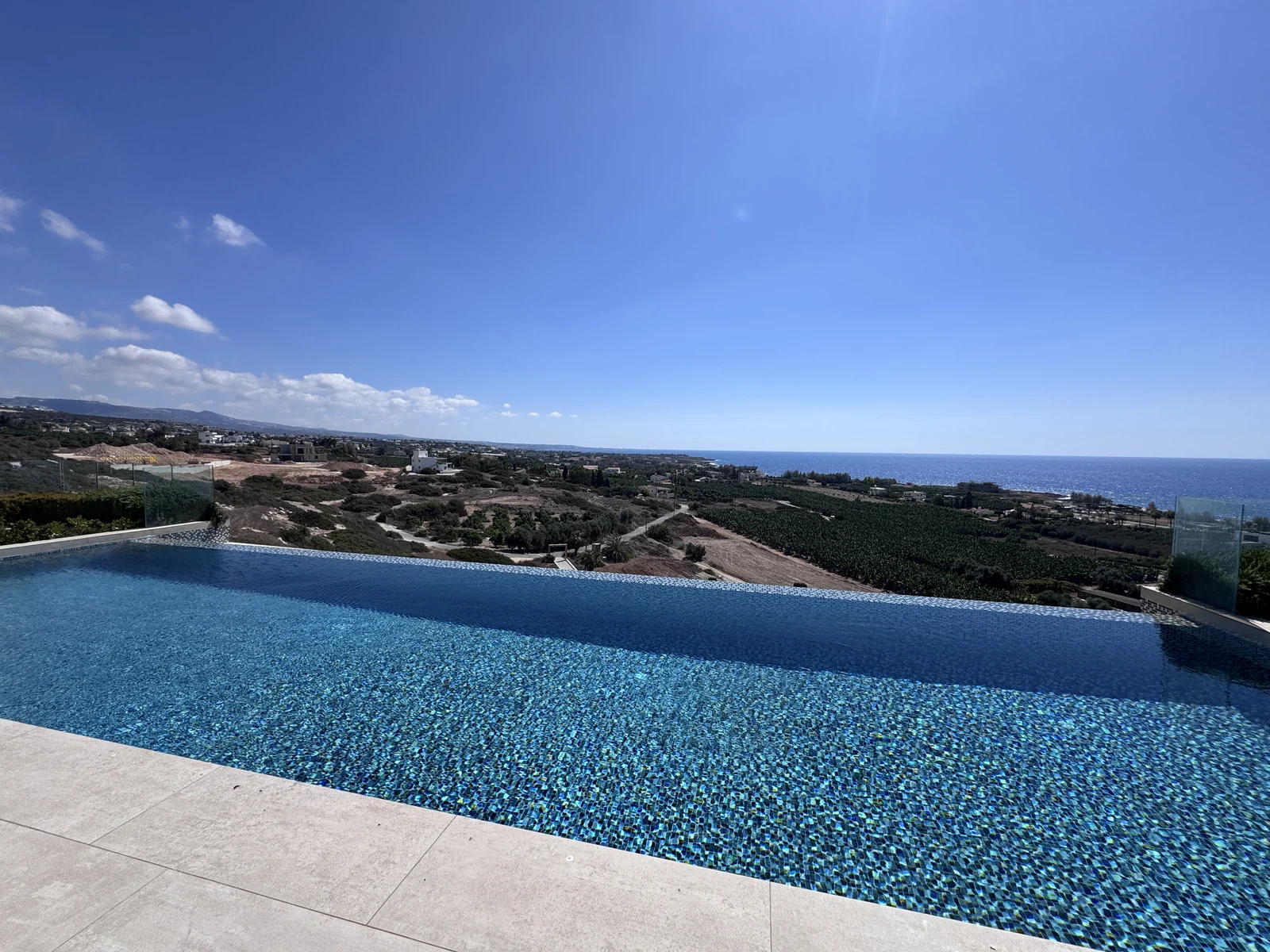
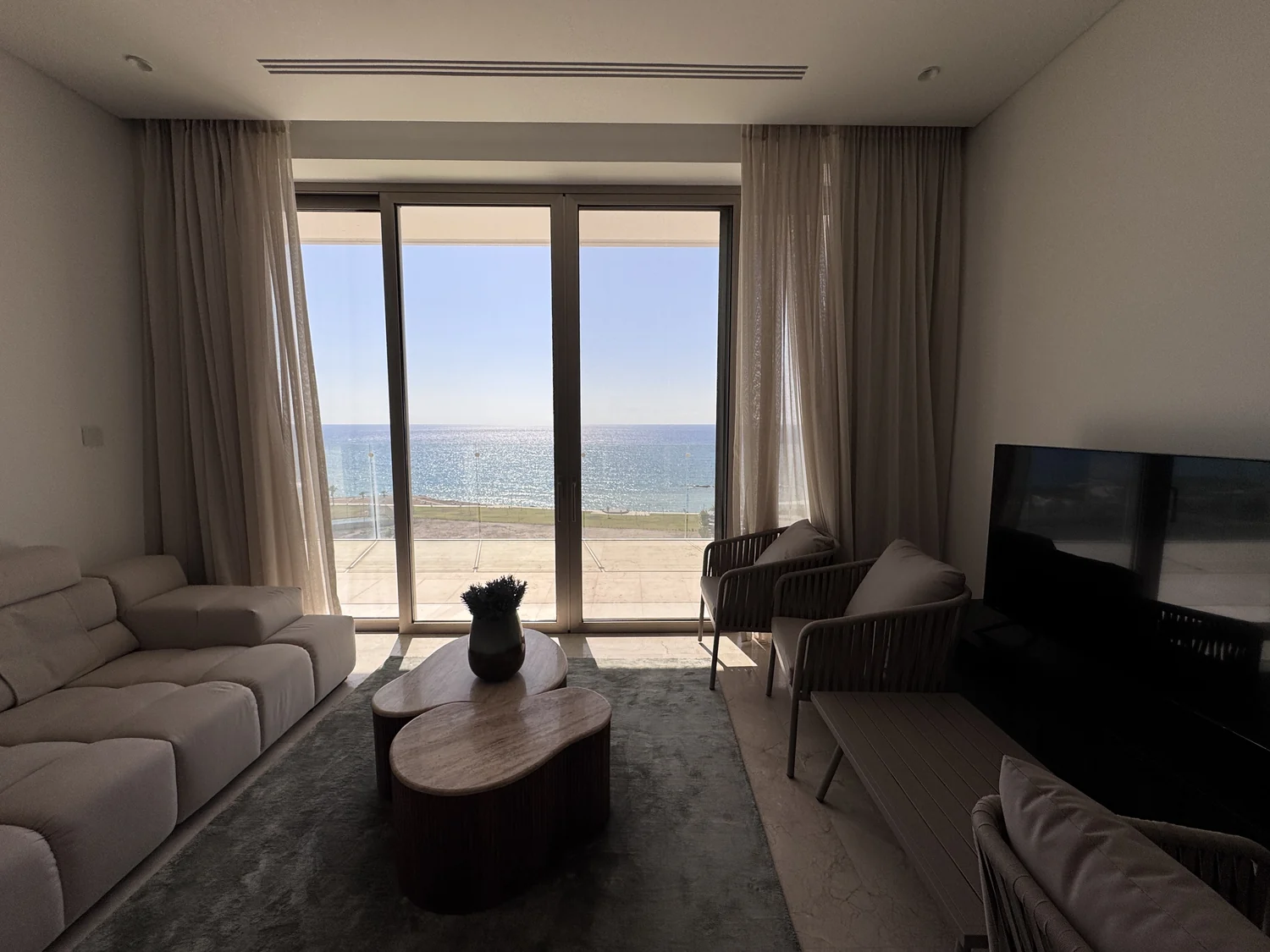
Good property photos are helpful, but they do not answer enough. A photo can show sea view, interior finish, terrace space or a pool, but it rarely explains seasonal noise, maintenance, cost, building history, exact boundaries, communal rules or practical access.
Use photos to create questions. If the living room faces the sea, ask about sun exposure, privacy, glass quality, cooling and how the space feels in hotter months. If a pool looks impressive, ask who maintains it, how often, at what cost and whether the system has any known issues. If a villa sits near the coast, ask about road access, wind, exposure if relevant and insurance questions.
Images should support comparison, not replace it. That is why a Costa Villa page pairs visual context with buyer questions and encourages independent review before decisions become fixed.
Make The Private Shortlist Request Specific
A private shortlist request is more useful when it gives enough detail for someone to filter well. The goal is not to write a long essay. The goal is to remove avoidable mismatch.
Include the areas you are considering, the areas you already ruled out, budget range, property type, bedroom range, outdoor needs, travel pattern, buying timing, maintenance tolerance and any concerns that need professional input.
Then add your decision style. Some buyers want to compare three strong options. Others want a broader early scan. Some need area education before property matching. Some are ready for viewings. Stating this helps shape the next step.
When the inquiry is specific, the reply can be more practical. That saves time and creates a better conversation.
Shortlist Details
Tell Costa Villa the areas you are considering, the home type you prefer, how often you expect to use the property, the budget range you want to respect and the questions that need a professional answer.
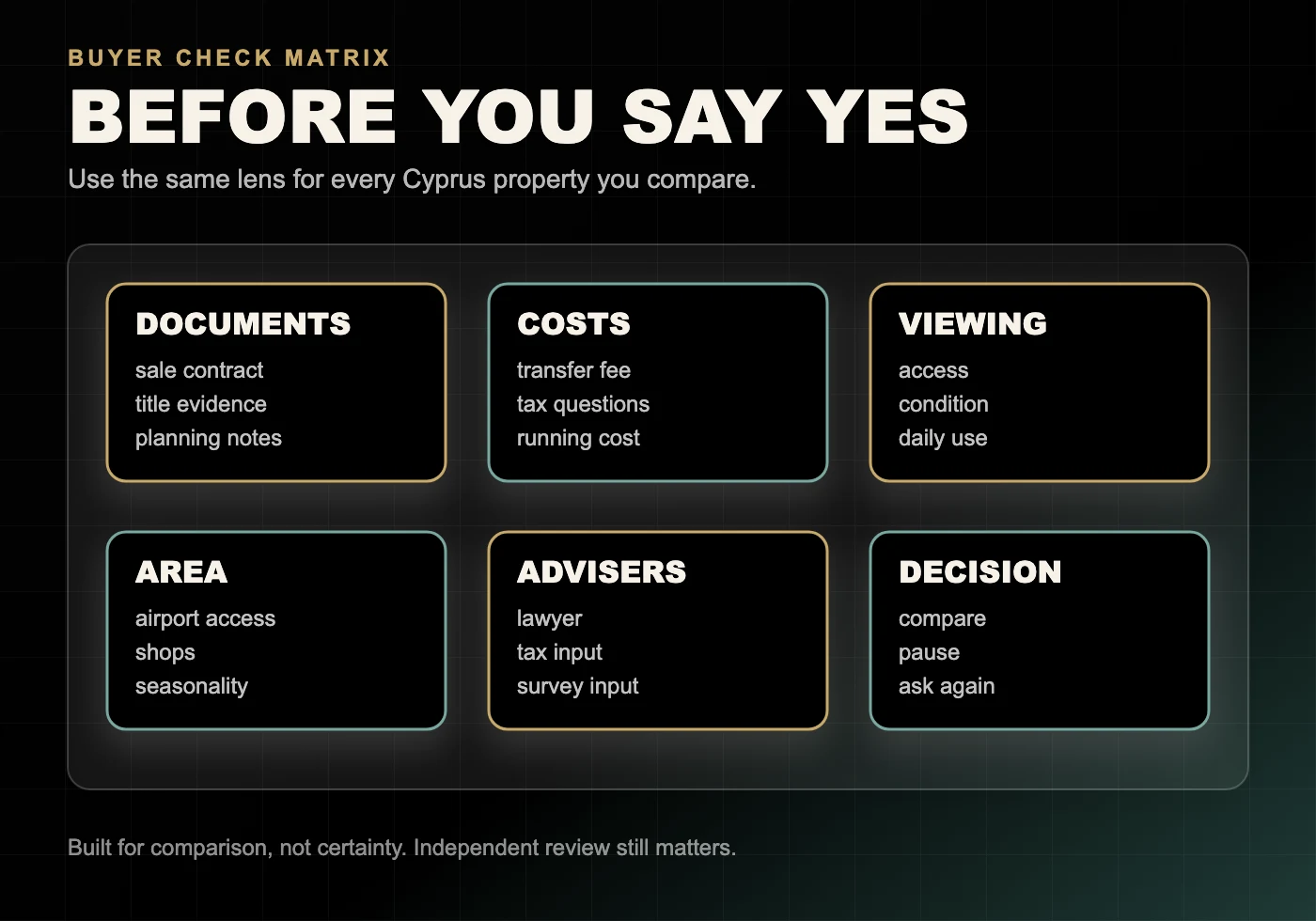
A Practical Buyer Check Matrix
Use the same lens for every property. This keeps comparisons calm when the photos are persuasive.
Documents: ask what can be reviewed, what is still pending and who should check it.
Costs: separate purchase price, transfer fees, taxes, professional fees, setup costs and running costs.
Viewing: check arrival, access, noise, condition, light, shade, privacy, storage and daily use.
Area: check airport access, shops, restaurants, winter rhythm, summer pressure, medical access and transport needs.
Advisers: know which questions belong with an independent lawyer, tax adviser, mortgage adviser, surveyor or other qualified professional.
Decision: compare, pause, ask again and avoid relying on a single attractive detail.
Keep Research Moving
If you are still choosing the broad search direction, start with the property for sale in Cyprus homepage. If villas are your main focus, use the villas for sale in Cyprus guide to compare villa-specific questions. If you want a shorter buyer checklist before you speak with anyone, use the Cyprus property buyer checklist. If you want to ask about your own search, request a private shortlist.
Questions
Buying Property In Cyprus FAQ
What is the first step when buying property in Cyprus?
Start with a written buyer brief. Note where you might buy, how the property will be used, what budget range fits, what property type you prefer and which questions need independent review.
Is buying property in Cyprus mostly about choosing the right area?
Area matters, but it is not the only first decision. The best starting point is the match between area, use case, property type, budget and maintenance expectations.
Should I compare villas and apartments together?
You can compare them early, but use different checks. Villas need more attention to pool, garden, privacy and upkeep. Apartments need more attention to communal fees, building condition, rules and shared spaces.
What should I ask before booking a viewing trip?
Ask why each property fits the brief, what documents can be reviewed, what costs are known, what remains uncertain and which question could remove the property from the shortlist.
How should I compare Paphos, Limassol, Larnaca and Protaras?
Compare daily use, airport access, services, seasonal rhythm, road comfort, price expectations and the type of property available. Do not choose only from photos or reputation.
What costs should I ask about besides the purchase price?
Ask about transfer fees, taxes, professional fees, mortgage costs if relevant, insurance, utilities, communal fees, maintenance, repairs, pool care, garden care and setup costs.
Can official transfer fees be checked online?
The Cyprus government provides an official transfer fee calculation service, and the Department of Lands and Surveys provides property tools. Treat them as starting points and ask a qualified professional how the rules apply to your purchase.
Do non-EU buyers need extra permission?
The Cyprus government states that foreign nationals from non-EU member states who wish to acquire immovable property need permission from the local District Administration. Buyers should confirm the current process with their adviser before relying on timing assumptions.
Is a new build easier than a resale property?
Not always. A new build can reduce some condition questions, but it raises questions about specification, completion, snagging, warranties, communal arrangements and what is included.
Is off-plan property in Cyprus suitable for cautious buyers?
It can be suitable only when the buyer understands the timing, documents, payment stages, specification, risk points and independent checks. Do not rely only on renders or promises.
What should I check when viewing a coastal villa?
Check access, privacy, wind, sun exposure, shade, pool maintenance, outdoor wear, noise, parking, security, services nearby and how the property works outside peak season.
What should I check when viewing an apartment?
Check communal fees, shared-area condition, lift maintenance if relevant, parking, storage, noise, rules, building upkeep, light, ventilation and the surrounding streets at different times.
How can I avoid falling for the best-looking listing?
Use the same written questions for every property. A beautiful property should still pass the area, cost, document, viewing and adviser checks.
Should I ask about title before viewing?
Yes, ask what title or ownership evidence can be reviewed by your adviser. The right professional should explain what the documents mean and what still needs to be checked.
Should I use a surveyor or inspector?
For many buyers, an independent condition check is useful, especially for resale homes, older buildings, villas, visible wear or properties with renovation plans. Ask a qualified professional what level of review fits the property.
How many properties should be on a good shortlist?
Enough to compare, not so many that the decision becomes noisy. Three to six serious options are often more useful than a long list with weak fit.
What makes a buyer inquiry easier to answer?
A clear inquiry includes area preferences, budget range, property type, use case, timing, outdoor needs, maintenance tolerance and the questions that need professional review.
Can Costa Villa tell me whether a property is safe to buy?
Costa Villa helps buyers prepare and compare questions. Legal, tax, mortgage, survey, title and ownership decisions should be handled by qualified professionals working for the buyer.
Should rental income be part of the first decision?
Only if you separate assumptions from evidence. Ask about rules, management, seasonality, occupancy, costs, taxes, insurance and what remains after expenses.
When should I request a private shortlist?
Request a private shortlist when your area, property type, budget and timing are clear enough for someone to filter options with purpose. If those points are still vague, use this guide and the buyer checklist first.
Next step
Turn the search into a better shortlist.
Send the areas, property type, timing, budget range and buyer questions you already know. Costa Villa can help shape a cleaner private shortlist before you spend time on mismatched options.